LESCO Theft Reporting: How to Report Electricity Theft Safely in 2026
Electricity theft is not a victimless problem. Kunda hooks, meter bypasses and illegal connections overload transformers, cause outages and raise losses that honest consumers end up paying for. In many areas, high losses also mean longer load shedding for everyone. LESCO theft reporting gives ordinary people a safe way to help stop it.
This guide explains what counts as electricity theft, every way to report it to LESCO, what details to give, how to stay safe and how to check whether someone is stealing from your own connection. It also explains what happens after you report.
Table of Contents
What Counts as Electricity Theft?
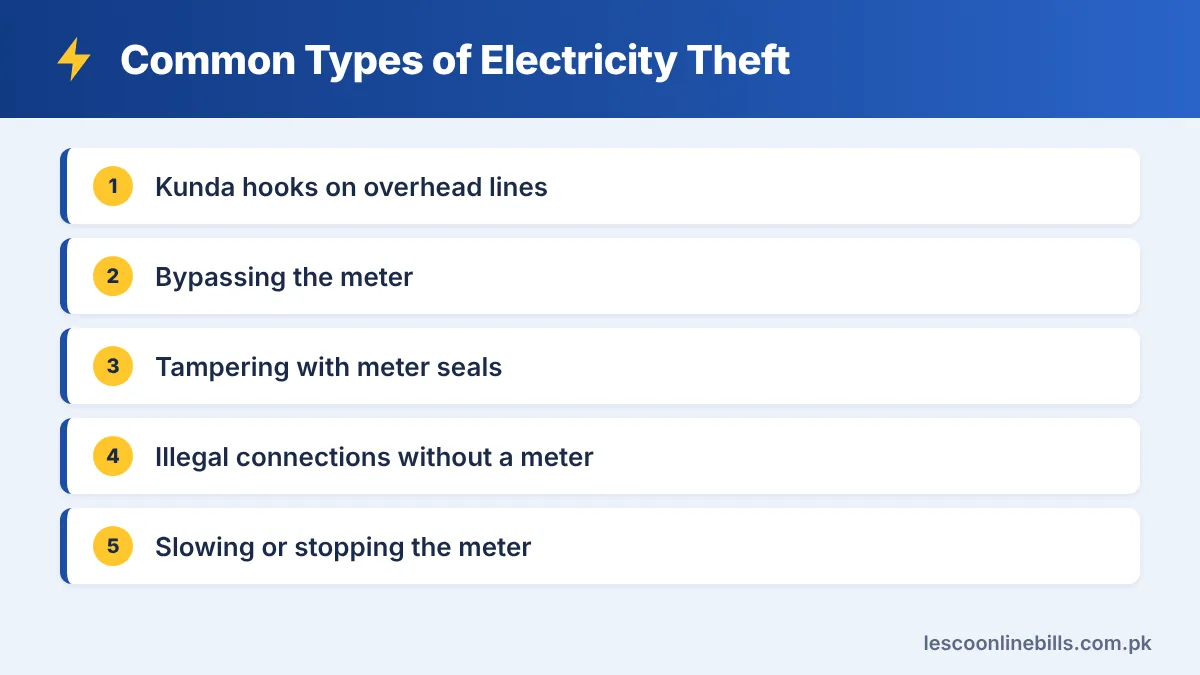
Electricity theft means using power without paying for it properly. Common forms include:
- Kunda: hooking a wire directly onto overhead LESCO lines.
- Meter bypass: connecting appliances so power does not pass through the meter.
- Meter tampering: breaking seals, opening the meter or using devices to slow or stop it.
- Illegal connections: taking supply without any meter or approval.
- Tapping a neighbour’s supply: secretly drawing power from someone else’s connection.
All of these are dangerous as well as illegal. Loose wires and overloaded lines cause fires and electrocution, especially during rain.
Why LESCO Theft Reporting Matters
- Fewer outages: illegal hooks overload transformers and cables, which then trip or burn.
- Less load shedding: areas with high losses often face longer power cuts.
- Safer streets: hanging wires are a serious risk to children and passers-by.
- Fairer bills: losses from theft add pressure on the whole system’s costs.
If your area faces longer outages than nearby areas, theft may be one reason. Check the official plan in our LESCO load shedding schedule guide.
Is Electricity Theft a Crime?
Yes. Electricity theft is a criminal offence under Pakistani law. Besides legal action, LESCO can charge offenders for the electricity used through a detection bill, which can be very large. Our LESCO detection bill guide explains how these bills are calculated and challenged.
LESCO and the government run regular anti-theft campaigns, but they rely on public information to find many cases. That is where LESCO theft reporting by ordinary citizens makes a real difference.
LESCO Theft Reporting: 5 Ways to Report Electricity Theft
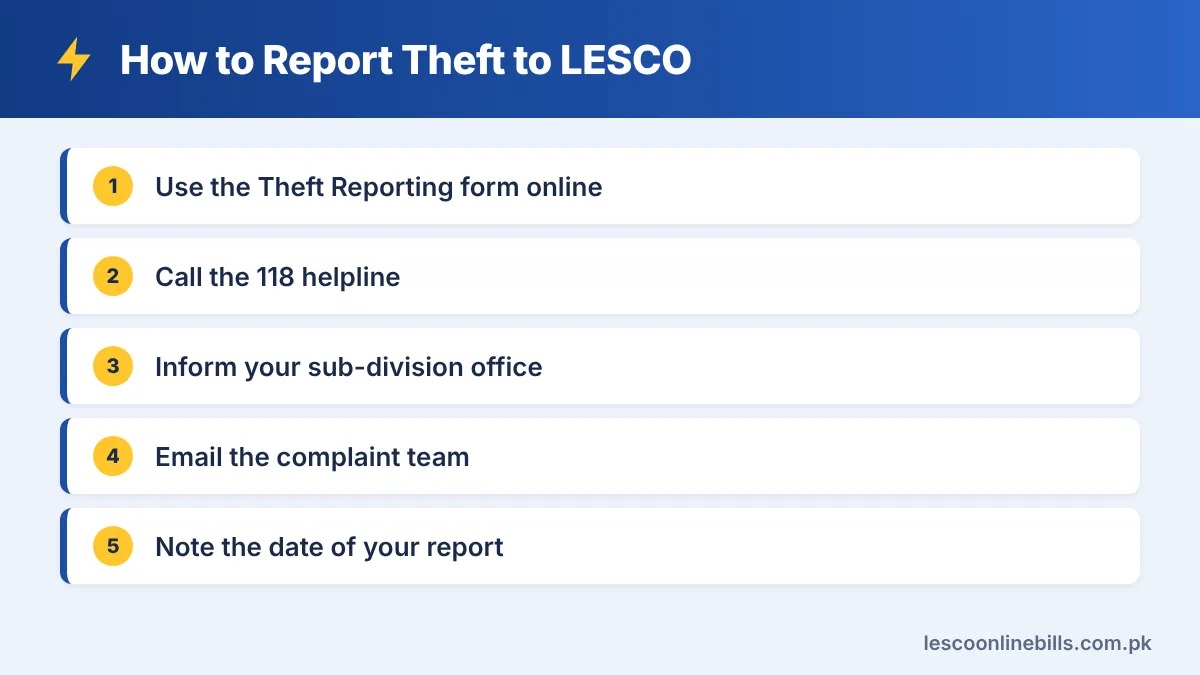
1. The Online Theft Reporting Form
The LESCO official website has a dedicated Theft Reporting page under Customer Services. The form asks for:
- Your name.
- Your email address.
- A description of the theft event.
- The answer to a captcha question.
Submit the form and note the date and time. Our LESCO official website guide shows where this and other services are in the menu.
2. The 118 Helpline
The phone is the quickest LESCO theft reporting option. Call 118 and say you want to report electricity theft. Give the area, street, nearby landmark and what you saw. Ask for a complaint number. Our LESCO helpline guide lists other useful numbers.
3. Your Sub-Division Office
You can also inform your local sub-division or SDO office in person or in writing. Local staff know the area and can send a team quickly. Find the right office in our LESCO office guide.
4. The Complaint System and Email
The LESCO website lists the complaint email [email protected] and the online complaint system (CCMS+). You can use these for LESCO theft reporting too, especially if you want a written record. See our LESCO complaint guide.
5. Escalation
If you report dangerous theft, such as hanging wires near a school, and nothing happens, follow up with your complaint number. If it is still ignored, our NEPRA complaint against LESCO guide explains how to escalate.
What Details to Give in Your LESCO Theft Reporting
Clear details help LESCO’s team find the problem quickly:
| Detail | Example |
|---|---|
| Location | Street number, block, area and city |
| Landmark | Near a mosque, school, shop or pole number |
| Type of theft | Kunda hook, bypass wire, tampered meter |
| Time seen | Date and time, or “every night after 8 pm” |
| Danger level | Wires hanging low, sparking or near water |
Stick to what you have seen. Do not guess or accuse people without reason; a factual report is taken more seriously.
LESCO Theft Reporting by Phone: What to Say
When you call 118, a short and clear message gets the best response. You can use this script:
Write down the complaint number, the date and the name of the operator if they share it. This record helps if you need to follow up later.
LESCO Theft Reporting in Rain and Emergencies
Illegal wires become much more dangerous in rain. Water, loose joints and low-hanging hooks are a deadly mix. If you see sparking wires, a wire lying on the ground or a hook touching a metal gate, treat it as an emergency:
- Keep everyone, especially children and animals, well away.
- Call 118 immediately and say it is a safety emergency.
- Do not try to move the wire with a stick or anything else.
- If someone has been shocked, do not touch them until the power is cut; call for medical help.
Emergency LESCO theft reporting can save lives, so do not wait for the online form in these situations.
LESCO Theft Reporting and Your Privacy
Many people hesitate because they worry about their neighbours finding out. The online form asks for your name and email, and phone reports may record your number. If privacy matters to you, ask the 118 operator or the sub-division how your details will be handled before you share them. Stick to facts about the location and the theft, and avoid discussing your report publicly or on social media.
LESCO Theft Reporting for Shops and Markets
Markets and roadside stalls sometimes run lights, fans and freezers from illegal hooks, especially at night. These connections overload lines that also supply nearby homes. Shopkeepers who pay their bills honestly lose out when supply trips or transformers burn. Market associations can help by reporting illegal connections together and asking LESCO to arrange proper connections for stalls that need them. A legal temporary or commercial connection costs money, but it avoids fines, fires and disconnection.
How LESCO Uses Theft Reports
Reports from the public help LESCO decide where to send inspection teams. A single report may lead to a site visit, while repeated reports from the same area help identify feeders with high losses. Over time, this information supports anti-theft campaigns, better meter placement and safer lines. Every accurate LESCO theft reporting entry adds to that picture, even if you do not see an immediate result.
Signs of Theft in Your Neighbourhood
You do not need technical knowledge to notice the common signs. Look out for:
- Thin wires running from overhead lines directly into a house or shop.
- Bright lights and ACs running in a building with no visible meter.
- Meters with broken seals, loose covers or extra wires attached.
- Transformers that trip or burn far more often than in nearby areas.
- Sparks or buzzing sounds from poles at night.
Seeing one of these signs does not prove theft, but it is enough reason for LESCO theft reporting so trained staff can check. Describe only what you can see from a public place, and leave the checking to LESCO.
Follow Up the Right Way
If nothing changes after a few weeks, call 118 again with the date of your first LESCO theft reporting entry and any complaint number. Ask whether an inspection has been done. For dangerous situations that remain unsafe, a written complaint creates a stronger record than repeated calls.
Stay Safe: Do Not Act Alone
Your safety comes first. When doing LESCO theft reporting, follow these rules:
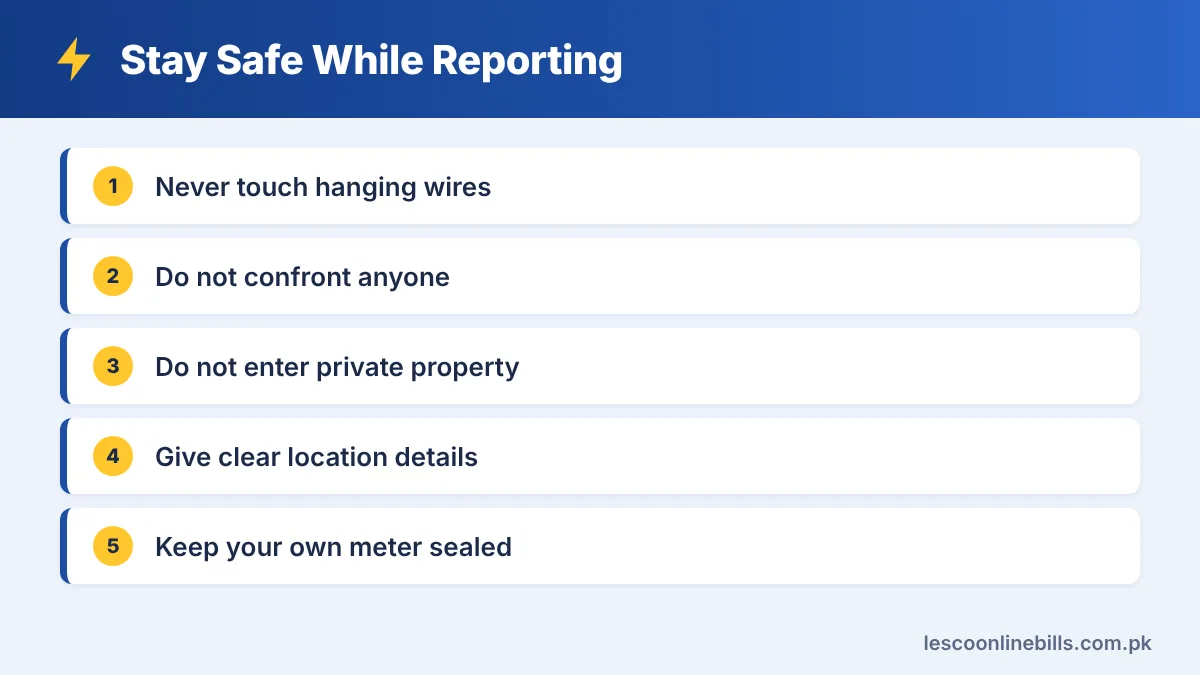
- Never touch hanging or illegal wires. They can be live and deadly.
- Do not remove hooks yourself. Leave it to trained LESCO staff.
- Do not confront anyone. Arguments over electricity can turn dangerous.
- Do not enter private property to take photos.
- Keep children away from sparking or low wires and report them as an emergency.
Is Someone Stealing From Your Connection?
Sometimes the theft is from your own supply. If your bill jumped without any change in your use, try this simple test:
- Switch off all appliances and lights.
- Turn off the main breaker inside the house.
- Watch the meter for a few minutes. On a smart meter, check whether units or the load indicator still increase.
- If the meter still records use, a wire may be tapping your supply before your breaker.
Report it to LESCO right away and ask for an inspection. Keep photos and your bills; they help if you need a LESCO bill correction. Our LESCO meter reading guide shows how to read your meter properly.
Protect Your Own Meter
Honest consumers can also be caught up in theft cases if their meter is damaged or tampered with by someone else. Protect yourself:
- Check the meter seal regularly and take a photo every few months.
- Report a broken seal, burnt meter or loose wires to LESCO immediately.
- Do not let private electricians open the meter.
- Keep the meter area visible and accessible, not hidden behind boxes.
- Ask for a written report whenever LESCO staff inspect your meter.
If your meter is damaged, apply for a replacement through the steps in our LESCO meter change guide.
What Happens After LESCO Theft Reporting?
- LESCO records your report.
- A team may visit the site to inspect.
- If theft is confirmed, illegal wires are removed and the connection may be disconnected.
- The offender can be charged through a detection bill.
- Legal action can follow under the law.
Inspections depend on staff availability and the seriousness of the case, so dangerous wires near homes and schools are usually treated as more urgent. You may not always hear back about the result, especially if the case involves legal action. If the theft continues, report it again with the date of your first report.
LESCO Theft Reporting for Landlords and Tenants
Landlords should check that tenants are not bypassing meters, and tenants should make sure the meter they rely on is sealed and working when they move in. Any theft found at a property can lead to charges on that connection. Our LESCO bill for tenants guide explains how to protect yourself with meter photos and a clear agreement.
Myths About Electricity Theft and LESCO Theft Reporting
- “Everyone does it, so it does not matter.” Theft raises losses, outages and safety risks for the whole area.
- “A small kunda will not be noticed.” Smart meters and inspections detect unusual patterns, and detection bills can be huge.
- “Reporting will not change anything.” Public reports help LESCO target inspections where theft is real.
- “Tampering only affects LESCO.” Fires from illegal wiring can destroy homes and lives.
Honest Ways to Lower Your Bill Instead
High bills push some people towards theft, but the risks are far greater than the savings. There are honest ways to pay less: stay in a lower slab, use the AC smartly, switch to LED lights and check every bill for errors. Our reduce LESCO bill guide lists 15 proven ideas, and installments are possible for large bills.
What If You Are Wrongly Accused?
Sometimes an honest consumer receives a theft notice or detection bill because of a fault, a damaged seal or someone else’s tampering. Stay calm and collect evidence: old meter photos, bills showing steady use and any earlier complaints you made. Ask for the inspection report in writing and file an objection at the sub-division. If the decision is unfair, you can escalate. This is another reason why careful LESCO theft reporting and regular meter photos protect honest families.
Community Action That Works
Neighbourhood committees, mosque committees and residents’ welfare associations can make a big difference. They can agree to report dangerous wires together, invite LESCO staff to explain safety and theft rules, and encourage families with high bills to look for honest solutions such as installments or energy saving. When a whole street supports LESCO theft reporting, offenders find it much harder to continue, and the area’s supply often becomes more reliable.
LESCO Theft Reporting Checklist
- Note the exact location and a landmark.
- Describe the type of theft clearly.
- Use the online form, 118 or the sub-division office.
- Save the date and any complaint number.
- Stay away from wires and do not confront anyone.
- Follow up if the problem continues.
- Keep your own meter sealed and photograph it every few months.
- Encourage neighbours to choose honest ways to lower their bills.
LESCO Theft Reporting FAQs
How can I report electricity theft to LESCO?
Use the Theft Reporting form on the LESCO website under Customer Services, call the 118 helpline, or inform your local sub-division office. Give the exact location, what you saw and when.
What details does the online theft reporting form ask for?
The form asks for your name, email address and a description of the theft event, followed by a captcha question. Describe the street, a nearby landmark, the type of theft and the time you noticed it.
Is electricity theft a crime in Pakistan?
Yes. Electricity theft is a criminal offence under Pakistani law, and LESCO can also charge offenders through detection bills for the electricity used.
Will my name be shared if I report theft?
The online form asks for your name and email. If you are worried about your privacy, ask the 118 helpline or the sub-division how your details will be handled before you report.
How can I tell if someone is stealing from my connection?
Switch off every appliance and the main breaker inside the house, then watch the meter. If it still records use, there may be a wire tapping your supply before the breaker. Report it to LESCO immediately.
What happens after I report theft?
LESCO can send a team to inspect the site. If theft is confirmed, it can remove illegal connections, charge the offender and take legal action under the law.
Final Words
LESCO theft reporting is simple, and it helps everyone in your area enjoy safer streets, fewer outages and fairer bills. Use the official Theft Reporting form on lesco.gov.pk, call 118 or inform your sub-division with clear details, and never touch wires or confront anyone yourself. Protect your own meter, check it regularly, and report anything suspicious early.